Parrot Lifespans: A Comprehensive Guide
Parrots are fascinating creatures known for their vibrant colors, intelligence, and ability to mimic human speech. One of the most intriguing aspects of these birds is their lifespan, which can vary dramatically depending on the species, size, and care provided. This guide delves into the lifespans of various parrot species, drawing from reliable sources and expert insights. Whether you’re a prospective parrot owner or simply curious about these avian wonders, understanding their longevity is crucial for appreciating the commitment involved in their care.
In general, smaller parrots tend to have shorter lifespans compared to their larger counterparts. For instance, small parrots like lovebirds and budgerigars typically live between 15 to 25 years, while large parrots such as macaws and cockatoos can thrive for 60 to 80 years or more. This disparity is illustrated beautifully in the following educational infographic, which highlights the key differences between small and large parrots.
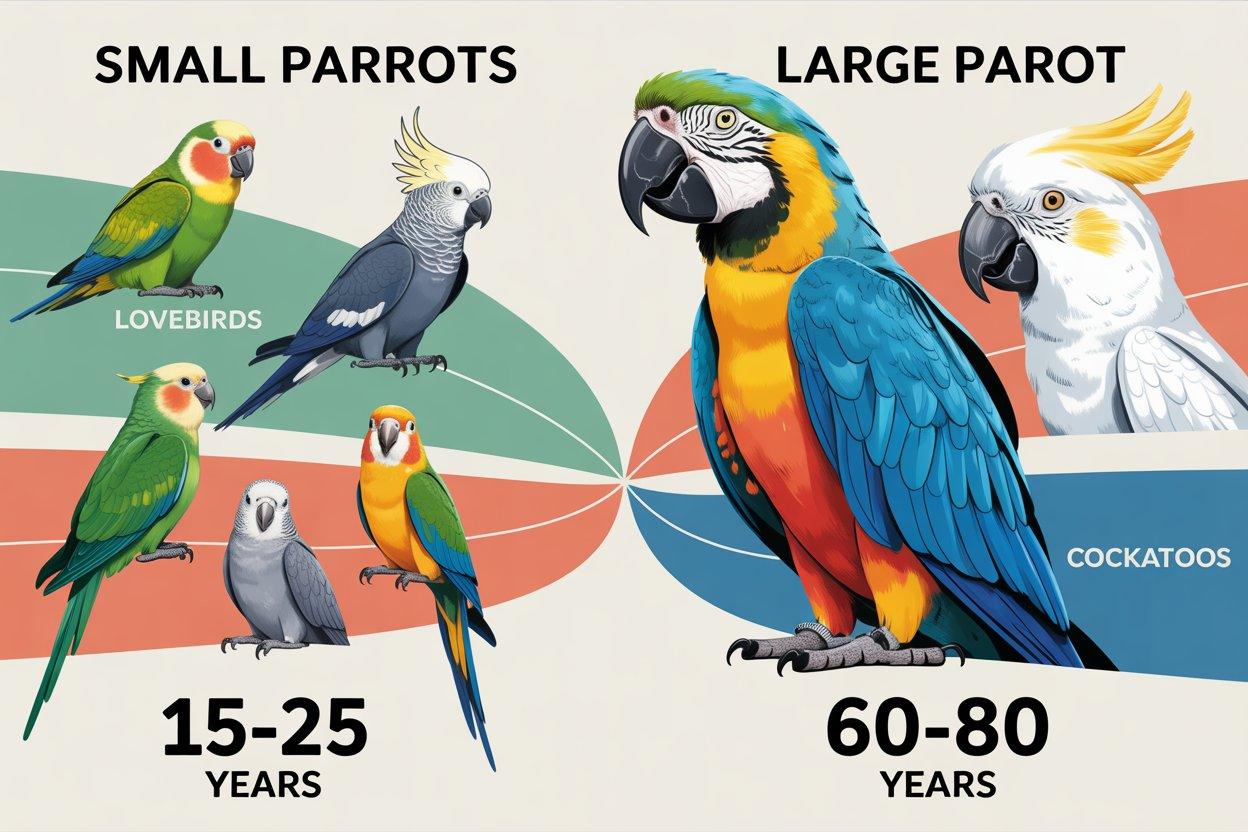
The infographic above showcases small parrots on the left, including lovebirds, cockatiels, and others, with an average lifespan of 15-25 years. On the right, large parrots like macaws and cockatoos are depicted, boasting impressive lifespans of 60-80 years. This visual representation serves as a starting point for our in-depth exploration.
Factors Influencing Parrot Lifespans
While species and size play significant roles in determining a parrot’s lifespan, several other factors can influence how long these birds live. Proper nutrition is paramount; a balanced diet consisting of pellets, fresh fruits, vegetables, and occasional nuts can prevent health issues and extend life. Regular veterinary check-ups, especially from avian specialists, help catch and treat diseases early. Environmental enrichment, such as toys, social interaction, and mental stimulation, reduces stress and promotes overall well-being. Genetics also matter, as some bloodlines may be predisposed to certain conditions. Finally, avoiding hazards like toxic fumes, poor air quality, and accidents is essential for longevity.
In captivity, parrots often live longer than in the wild due to protection from predators and consistent food sources. However, neglect or improper care can drastically shorten their lives. For example, obesity from a seed-only diet or loneliness from lack of socialization can lead to fatal health problems. Responsible ownership involves committing to decades of care, sometimes outlasting the owner’s lifespan, necessitating plans for the bird’s future.
Research from various sources, including veterinary databases and rescue organizations, shows that well-cared-for parrots frequently exceed average lifespan estimates. A famous example is Cookie, a Major Mitchell’s cockatoo who lived to 83 years in a zoo. Such cases underscore the importance of optimal husbandry practices.
Lifespans of Large Parrot Species
Large parrots impress with their size, intelligence, and longevity, often becoming lifelong family members. Macaws, the giants of the parrot world, boast lifespans of 50 to 80 years or more. The hyacinth macaw, the largest species, lives 50-60 years in the wild but can exceed 80 in captivity. Blue and gold macaws similarly reach 50-70 years.
Cockatoos, with their expressive crests, live 20 to 60 years, though some like the Moluccan cockatoo have reached 92. Sulphur-crested cockatoos often live 70-80 years. These birds are highly social and vocal, requiring significant attention.
African grey parrots, renowned for their cognitive abilities, live 40 to 60 years or longer. Famous individuals like Alex have demonstrated advanced language skills, highlighting their intelligence.
Amazon parrots, sturdy and talkative, have lifespans of 25 to 75 years. Species like the yellow-naped Amazon can live over 60 years. Eclectus parrots, with striking sexual dimorphism, live 30 to 50 years.
Other notables include the kea, a New Zealand parrot living up to 50 years, and the military macaw, averaging 50-60 years. These large birds demand spacious aviaries, diverse diets, and ongoing training to thrive.
Care Tips for Maximizing Parrot Longevity
To ensure your parrot lives a long, healthy life, focus on holistic care. Provide a spacious cage or aviary with perches of varying diameters to promote foot health. Offer a varied diet: 60-70% pellets, 20-30% fresh produce, and limited seeds as treats. Regular exercise, including supervised out-of-cage time, prevents obesity and boredom.
Socialization is key; parrots are flock animals and need daily interaction. Teach tricks and provide puzzle toys for mental stimulation. Monitor for signs of illness like changes in droppings, lethargy, or feather plucking, and seek prompt veterinary care.
Avoid common pitfalls: no chocolate, avocado, or caffeine, which are toxic. Maintain clean living spaces to prevent bacterial infections. For long-lived species, consider estate planning to ensure continued care after your lifetime.
By following these guidelines, you can help your feathered friend reach the upper end of their species’ lifespan, enjoying many years of companionship.