Cleveland Cavaliers vs Pacers Match Player Stats
Complete Breakdown: Cleveland Cavaliers vs Pacers Match Player Stats
When two Eastern Conference heavyweights clash, the box score tells a story of tactical adjustments, physical dominance, and individual brilliance. Evaluating the Cleveland Cavaliers vs Pacers match player stats reveals a fascinating contrast in basketball philosophies. The Cavaliers rely on suffocating frontcourt size and dynamic guard scoring, while the Pacers push a relentless pace, utilizing floor spacing and quick-hitting transition offense.
Following their intense battle in the 2025 NBA Playoffs, the 2025-2026 regular-season matchups between Cleveland and Indiana have delivered spectacular individual performances. By diving deep into the player statistics, shooting percentages, and advanced metrics from their most recent games, we can uncover exactly how these games were won and lost.
The Rivalry Takes Shape: Contextualizing the Matchup
To understand the numbers, you have to understand the history. After the Indiana Pacers eliminated the top-seeded Cavaliers in five games during the 2025 Eastern Conference Semifinals, the dynamic between these two teams shifted. The 2025-2026 season series became a proving ground.
Cleveland entered the new season determined to impose their physical will, focusing heavily on paint protection and rebounding. Indiana, conversely, aimed to maintain the high-octane offensive rhythm that made them so dangerous the previous spring. The resulting player stats from their recent encounters highlight exactly how Cleveland successfully flipped the script, culminating in a series of dominant regular-season victories.
Recent Clash Analysis: The January 6, 2026 Thriller (Cavaliers 120 – Pacers 116)
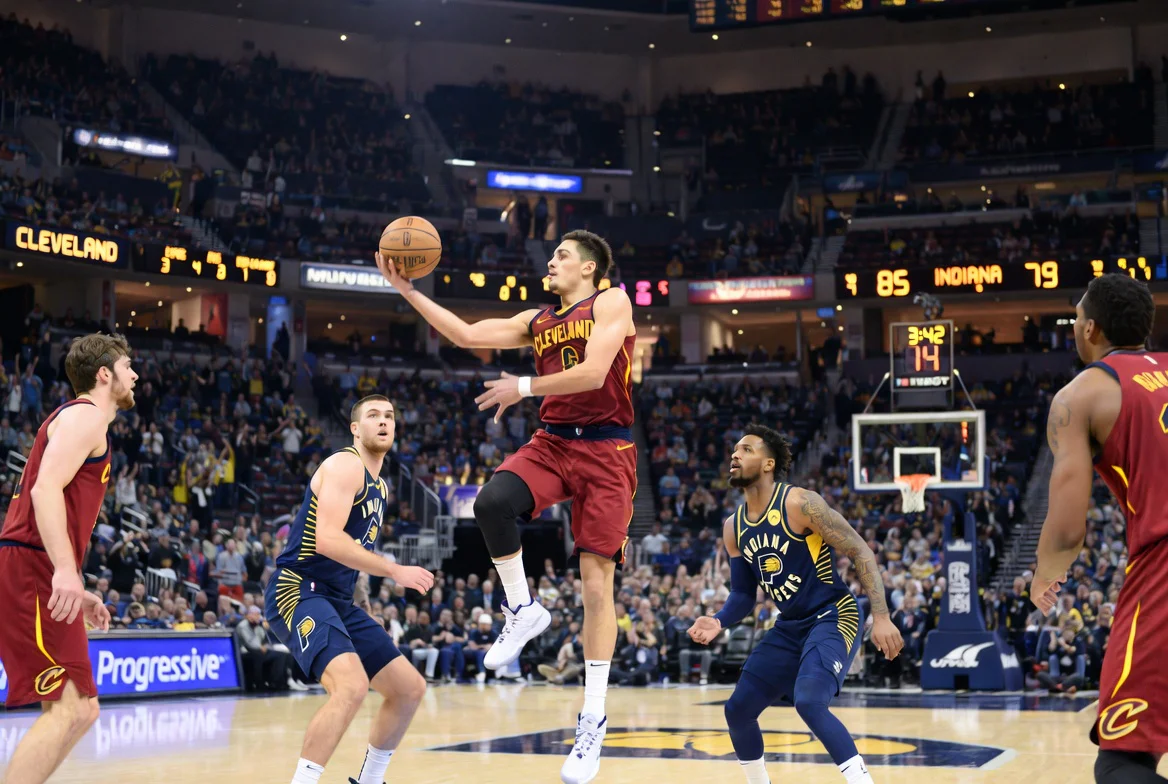
On January 6, 2026, the Cavaliers secured a hard-fought 120-116 victory in Indianapolis. The game was a tale of two halves, with Indiana controlling the early tempo and building a 93-84 lead heading into the fourth quarter. However, a massive 36-23 final period for Cleveland completely erased the deficit. The player statistics from this game perfectly illustrate how the Cavaliers executed their comeback.
Cavaliers Player Stats and Impact
Cleveland’s balanced attack was the catalyst for their late-game surge. The box score highlights exceptional efficiency across the starting lineup and crucial bench contributions.
- Darius Garland: Garland was the undeniable MVP of the night. He poured in 29 points on a highly efficient 14-of-23 shooting from the field. More importantly, he orchestrated the offense flawlessly, logging 6 assists with zero turnovers. In a game defined by late execution, a lead guard scoring 29 points without giving the ball away is a statistical rarity that directly correlates to winning.
- Evan Mobley: Mobley provided crucial stability on both ends of the floor, finishing with 20 points (8-of-16 shooting), 6 rebounds, and 5 assists. His ability to act as a secondary playmaker from the high post dismantled Indiana’s defensive rotations in the fourth quarter.
- Jarrett Allen: The anchor of Cleveland’s paint dominance, Allen recorded a powerful double-double with 19 points and 12 rebounds. He shot 8-of-13 from the field and pulled down 3 massive offensive rebounds, generating critical second-chance opportunities.
- Sam Merrill: Spacing the floor beautifully, Merrill capitalized on the gravity of Cleveland’s big men. He scored 19 points, knocking down 6 of his 10 attempts from beyond the arc.
Pacers Player Stats and Resistance
Despite the late collapse, the Pacers’ box score reveals strong individual performances, particularly in the mid-range and transition game.
- Pascal Siakam: Siakam was the focal point of Indiana’s offense, leading the team with 22 points. However, Cleveland’s defense forced him into high-volume shooting, as he needed 23 attempts (9-of-23) to reach his total.
- Jay Huff: A surprising statistical standout, Huff tied his season-high with 20 points. He was incredibly efficient, shooting 7-of-10 from the field and 4-of-7 from three-point range, pulling Cleveland’s big men away from the basket.
- Andrew Nembhard: Tasked with running the offense, Nembhard recorded a stellar double-double, finishing with 15 points and 11 assists. He expertly navigated the pick-and-roll for the first three quarters before Cleveland’s perimeter traps shut off his passing lanes in the final twelve minutes.
The Turning Point in the Box Score
The true story of the January 6th game isn’t found in the scoring column, but in the rebounding and efficiency metrics. The Cavaliers shot a blistering 56% from the field compared to Indiana’s 46%. Furthermore, Cleveland dominated the glass, pulling down 48 total rebounds against Indiana’s 32. That plus-16 rebounding margin completely negated Cleveland’s sloppy ball security (19 turnovers). Indiana generated extra possessions through steals, but Cleveland simply owned the paint (64-42 in paint points), turning the game into a physical grind that the Pacers could not sustain.
The High-Scoring Affair: December 1, 2025 (Cavaliers 135 – Pacers 119)
A month prior, on December 1, 2025, the narrative was completely different. While the January game was a gritty comeback, the December matchup was an offensive masterclass by Cleveland, resulting in a blowout 135-119 victory.
Donovan Mitchell’s Statistical Masterclass
Any analysis of the Cleveland Cavaliers vs Pacers match player stats from this night begins and ends with Donovan Mitchell. Operating without his backcourt partner Darius Garland (who sat out due to injury management), Mitchell absorbed a massive usage rate and delivered a legendary performance.
Mitchell erupted for 43 points on 16-of-27 shooting from the field. He added 4 three-pointers, 9 rebounds, and 6 assists. His stat line reflects total offensive control. He manipulated the Pacers’ drop coverage, got to his spots in the mid-range, and aggressively finished at the rim.
But Mitchell wasn’t alone. Jaylon Tyson emerged as a statistical revelation, scoring 27 points on a blistering 10-of-13 shooting performance, while adding a team-high 11 rebounds. When a team’s star drops 43 points and a supporting player shoots nearly 80% from the floor for 27 points, the opposing defense has effectively collapsed.
Indiana’s Offensive Output vs. Defensive Struggles
Indiana’s offensive numbers in this game were completely respectable. They shot 49% from the field as a team. Pascal Siakam had an excellent night with 26 points, and Andrew Nembhard added 21 points. Garrison Mathews provided a vital spark off the bench with 15 points, hitting all three of his attempts from deep.
So, why did they lose by 16 points? The player stats point to two glaring issues: rebounding and ball security. Cleveland won the rebounding battle 48-36. More critically, Indiana committed 14 turnovers in a game where they could not afford to waste a single possession. Cleveland capitalized heavily on those mistakes, building a massive 21-point lead in the first half that essentially ended the competitive phase of the game early.
Positional Statistical Battles
When breaking down the Cleveland Cavaliers vs Pacers match player stats over multiple games, distinct positional trends emerge. These trends dictate the flow of the game and ultimately decide the victor.
The Backcourt Duel: Mitchell & Garland vs. Nembhard & Haliburton
The guard battle in this matchup is a clash of styles. Cleveland’s backcourt is built on heavy shot creation and perimeter scoring. Mitchell and Garland are volume scorers who simultaneously act as the primary playmakers. Garland’s 29-point, zero-turnover masterclass in January and Mitchell’s 43-point explosion in December prove that when Cleveland’s guards are hitting their pull-up jumpers, the team is nearly unbeatable.
Conversely, Indiana’s backcourt, often led by Andrew Nembhard (and Tyrese Haliburton when healthy), focuses on ball movement and pace. Nembhard’s stats consistently reflect high assist numbers (11 assists in January, 8 assists in a November 2025 matchup where he scored 32 points). The Pacers’ guards prioritize getting the defense in rotation and finding open shooters. The statistical battle here is simple: if Cleveland’s guards outscore Indiana’s guards by a significant margin, Indiana’s assist numbers do not matter.
Frontcourt Physicality: Mobley & Allen vs. Siakam & Turner
The frontcourt numbers heavily favor Cleveland, and this is where the series has tilted in the 2025-2026 season. The dual-big lineup of Evan Mobley and Jarrett Allen creates a statistical nightmare for the Pacers.
In almost every recent matchup, Allen and Mobley combine for over 20 rebounds. Their presence alters Indiana’s shot profile. Indiana relies on Pascal Siakam to create mismatches as a versatile power forward, and while Siakam gets his numbers (regularly scoring in the 20s), his efficiency drops when contested by Mobley’s length. Myles Turner, Indiana’s floor-spacing center, is often pulled to the perimeter, which neutralizes his offensive rebounding potential and leaves the paint vulnerable to Allen’s activity on the glass.
Beyond the Box Score: Team Metrics That Define the Matchup
Individual player stats are only half the equation. The aggregated team numbers from these recent matchups paint a vivid picture of the tactical warfare between the coaching staffs.
Rebounding Margins and Second-Chance Points
The most glaring discrepancy in the Cleveland Cavaliers vs Pacers match player stats is the rebounding margin. In their early 2026 matchups, Cleveland consistently out-rebounded Indiana by double digits (48-32 in January, 48-36 in December).
This is not just a size advantage; it is a schematic choice. Cleveland commits bodies to the offensive glass, generating back-breaking second-chance points. Every offensive rebound resets the shot clock, forces the defense to scramble, and denies Indiana the opportunity to run out in transition—which is the foundation of the Pacers’ offense.
Turnovers and Fast Break Execution
Turnovers represent the chaotic variable in this matchup. Interestingly, Cleveland has proven they can win even when losing the turnover battle. In the January 2026 game, the Cavs committed 19 turnovers to Indiana’s 14. However, Indiana failed to convert those turnovers into high-efficiency fast-break points.
When Indiana is winning, their fast-break points soar. They thrive on live-ball turnovers. But Cleveland’s elite transition defense—often anchored by Mobley sprinting back to protect the rim—has mathematically reduced Indiana’s fast-break efficiency.
Three-Point Efficiency and Floor Spacing
In the modern NBA, the three-point line is the ultimate equalizer. Indiana is structurally built to win the math game from behind the arc. They space the floor with five shooters, requiring defenders to cover an immense amount of ground.
However, Cleveland has found the antidote. By deploying designated shooters like Sam Merrill (who hit 6 threes in the January matchup), Cleveland matches Indiana’s perimeter math while retaining their massive interior advantage. When the Cavaliers shoot over 38% from three as a team, their inside-out game becomes virtually unguardable.
Looking Back: The 2025 NBA Playoffs Statistical Context
You cannot fully appreciate the recent regular-season numbers without acknowledging the trauma and triumph of the 2025 Eastern Conference Semifinals. In that series, the Pacers dismantled the Cavaliers 4-1.
During Game 4 of that series (a 129-109 Pacers win), Indiana built an NBA playoff-record 41-point halftime lead. The stats from that series highlighted Cleveland’s lack of spacing and Indiana’s relentless pace. Pascal Siakam averaged a highly efficient 17.8 points per game, while Tyrese Haliburton orchestrated the offense with 7.0 assists per game. Indiana shot over 50% from the field as a team across the series.
The 2025-2026 regular-season stats show a clear evolution. Cleveland adjusted. They stopped trying to run with Indiana and instead forced the Pacers into a half-court physical grind. The rebounding numbers flipped, Cleveland’s role players started hitting threes, and the Cavaliers reclaimed authority in the rivalry.
Final Verdict: What the Stats Tell Us About the Future
A thorough review of the Cleveland Cavaliers vs Pacers match player stats provides a clear blueprint for how these teams interact on the hardwood.
For the Indiana Pacers to succeed, they require flawless ball movement, high-volume three-point shooting, and the ability to force turnovers to fuel their transition game. If they are forced to play slow, half-court basketball, their lack of traditional rebounding size is exposed.
For the Cleveland Cavaliers, the formula is established: dominate the glass, protect the paint, and let Darius Garland and Donovan Mitchell dictate the offensive flow. When Cleveland controls the rebounding margin by 10 or more, their win probability skyrockets, regardless of how well Indiana shoots the ball.
As the season progresses, monitoring these specific statistical battlegrounds—points in the paint, rebounding margins, and backcourt efficiency—will tell you exactly who is controlling the narrative of this fierce Eastern Conference rivalry.
Who scored the most points in the most recent Cavaliers vs Pacers game?
In the January 6, 2026 game, Darius Garland led all scorers with 29 points, shooting an efficient 14-of-23 from the field while dishing out 6 assists.
How many points did Donovan Mitchell score against the Pacers in December 2025?
Donovan Mitchell delivered a masterclass performance on December 1, 2025, scoring 43 points to lead the Cavaliers to a 135-119 victory.
Which team usually wins the rebounding battle between Cleveland and Indiana?
The Cleveland Cavaliers heavily dominate the rebounding battle against the Pacers. In their recent 2025-2026 matchups, Cleveland consistently out-rebounded Indiana by double digits, utilizing the size of Evan Mobley and Jarrett Allen.
Who won the 2025 playoff series between the Cavaliers and Pacers?
The Indiana Pacers won the 2025 Eastern Conference Semifinals series against the Cleveland Cavaliers, eliminating them in five games (4-1).
How did Pascal Siakam perform in the recent games against Cleveland?
Pascal Siakam remains a consistent offensive threat. He scored 22 points in the January 2026 matchup and 26 points in the December 2025 game, serving as Indiana’s primary scoring option in the frontcourt.
About the Author